
In this guide:
- 21 sleeping positions and what each one typically reveals about your cat’s mood and trust levels
- How to tell a normal nap from a sleeping position that could signal illness, fever or pain
- What’s different about kittens, seniors and specific conditions like arthritis
- When a change in sleeping position is worth a call to your vet
The range and types of sleeping cat positions seem to be far more extensive than the equivalent for humans. I find my Siberian cat Alexei in all sorts of odd places and positions and he genuinely appears to be asleep. I don’t know how he does it!
It made me curious about cat sleeping positions — was there any particular meaning to them? Did one position signal something versus another that I should be aware of? So here are 21 sleeping cat positions and what they might reveal about your favourite feline, plus how to tell the difference between a completely normal nap and a position that’s worth keeping an eye on.
Contents
21 Sleeping Cat Positions
1. All Curled Up or the “Crescent”

This is one of the most common sleeping positions. It maximises warmth and protects vital organs — a habit left over from life in the wild. Cats can also curl this tightly if they’re feeling a bit insecure.
2. In a Box
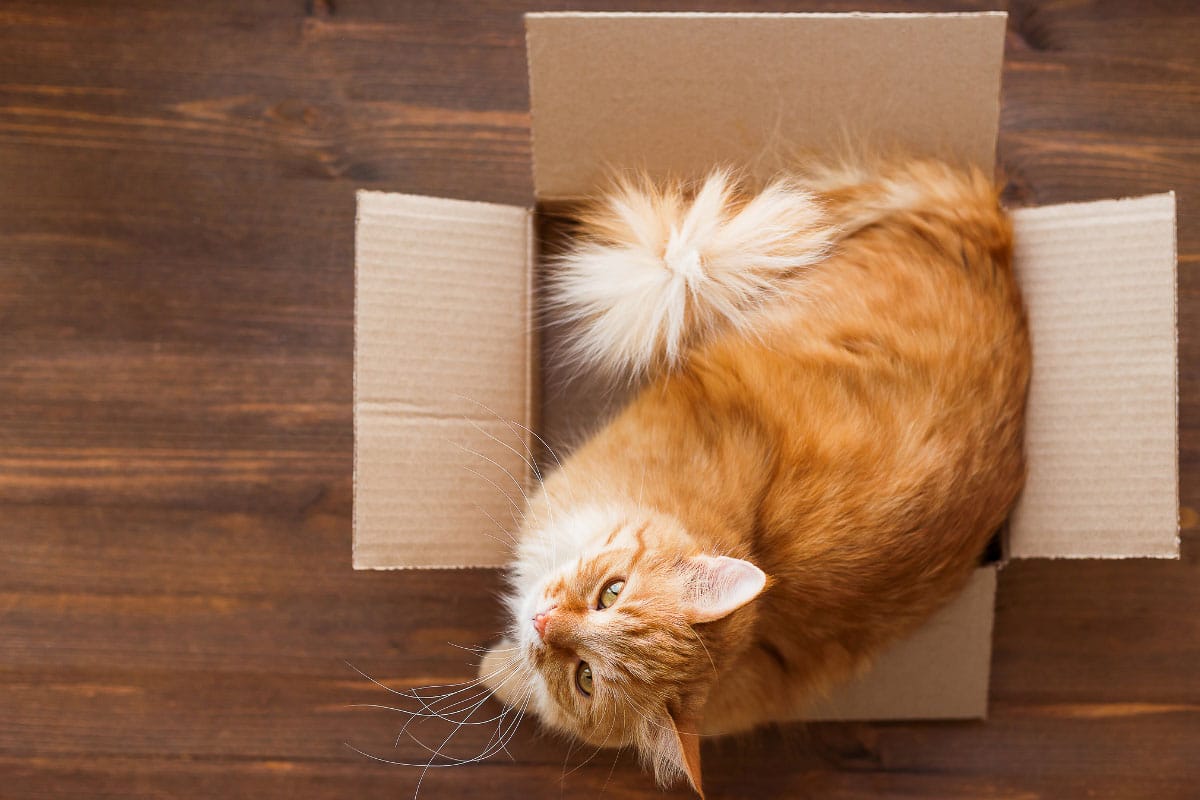
Cats are drawn to boxes because they offer a sense of protection — good cover for hunting, or for staying hidden from predators. If your cat is suddenly seeking out boxes more than usual, it’s worth thinking about whether something new (a pet, a visitor, a change at home) might be making them want to hide.
3. Belly Up

A cat sleeping belly-up, paws splayed, is showing you real trust. It’s a vulnerable position, so cats generally only take it when they feel completely safe in their surroundings.
4. Eyes Half Shut

Cats can doze with their eyes half open so they don’t miss a potential threat. Notice when your cat does this — is it when visitors are over, or after something’s changed at home?
5. The Classic Loaf

The “loaf” — upright, front paws tucked under the body — is a relaxed position that still keeps your cat somewhat alert. It’s usually a nap rather than deep sleep.
6. Sideways

Similar to belly-up but slightly less exposed. Sleeping on their side is usually a nap position and a sign your cat feels comfortable in your presence.
7. Paws Across Face

An unconscious “do not disturb” sign, and a sign your cat is in a deep sleep.
8. On the Edge

Cats often perch to sleep on the edge of a sofa, banister or staircase rail, dangling their paws, so they can keep an eye on their surroundings even at rest.
9. The “Surely That Can’t Be Comfortable” Position

Every cat owner has seen their cat asleep at an angle that shouldn’t be physically possible. There’s no deeper meaning here — just a very flexible cat.
10. Sitting Up

A brief cat-nap position, usually lasting 15–20 minutes, that lets your cat wake at a moment’s notice.
11. Sleeping on You

A strong positive sign for your relationship — your cat is choosing closeness and putting their guard down. They’ll often pick your legs or chest since these areas are less likely to move than an arm.
12. Superman

Lying flat on the belly with front and back paws stretched out. This is a sign of a very relaxed, deeply sleeping cat.
13. Tucked In

Cats cuddling under blankets, in drawers, or under furniture are seeking warmth, comfort and protection — this is when a cat is at its most vulnerable, so they choose the safest spot they can find.
14. With Another Cat

Kittens sleep in a heap with mother and siblings for warmth and safety, and many cats carry that comfort with them — sleeping close to another cat in the household, often with bellies exposed, is a good sign of a comfortable relationship between them.
15. Curled Up in a Ball

A tighter variation of the crescent, with nose and tail almost touching, to conserve as much body heat as possible.
16. On Top of Furniture

Cats love a high vantage point — the top of a bookshelf or printer gives a wide view of the room, so they can react quickly if anything changes.
17. With a Dog

Cats and dogs can absolutely form real bonds, and a cat sleeping next to a household dog is a good sign of a comfortable relationship between them.
18. In the Litter Box

A small number of cats sleep in the litter box out of habit from kittenhood, but for most cats, this is worth a vet visit — it can be a sign of urinary or digestive discomfort that makes them want to stay close by, just in case.
19. Flat on Its Stomach (“Splooting”)

Lying flat with all four paws stretched out helps stretch the hip joints and ease muscle tension, and the cooler surface can help your cat cool down.
20. In Bed With You

Getting under the covers or lying against your legs or feet is usually a positive sign, and cats often do this more when they’ve missed you — after time away, for instance.
21. The Same Position, Every Time

This is the one worth paying closest attention to. Cats naturally sleep in a variety of positions from day to day. If your cat is sleeping in the exact same position every single time, it’s worth considering whether something’s off.
For example, a cat that’s constantly curled tightly in a warm spot may be struggling to stay warm — worth checking for hypothermia risk. A cat that never varies from a stretched-out position, or always sleeps with eyes slightly open, could be dealing with discomfort or an eye condition rather than simply enjoying unihemispheric sleep. One unusual nap isn’t a red flag on its own — but a consistent pattern, especially alongside other signs of illness, is.
Normal vs. Sick Sleeping Positions: The Key Differences
Most of the 21 positions above are completely normal, and many (belly-up, sleeping on you, sleeping with another pet) are genuinely good signs. The difference between a normal nap and a position that signals illness usually comes down to three things: duration, consistency, and what else is going on.
| Sign | Usually Normal | Worth Watching |
|---|---|---|
| Curling tightly | Occasional, for warmth or comfort | Constant, even in a warm room, or paired with shivering |
| Sleeping more than usual | A day or two after a busy day, vet visit, or vaccination | Ongoing lethargy lasting several days, or sleeping through normal wake-up cues like feeding time |
| Hiding to sleep | Loud house, new pet, visitors | Hiding for extended periods, avoiding food/water, or hiding somewhere unusual like a litter box |
| Stiffness on waking | Brief, resolves within a minute or two, common in older cats | Persistent stiffness, reluctance to jump, or vocalising when moving |
| Breathing while asleep | Slow, steady, occasional soft snoring in flat-faced breeds | Rapid, laboured, or open-mouth breathing |
| Sleeping position never varies | N/A — cats naturally vary position | Same exact position every single sleep, especially alongside other symptoms |
A single unusual nap is rarely a concern. A pattern that persists for more than a couple of days, or that comes with other symptoms like reduced appetite, hiding, or vocalising, is the point at which it’s worth calling your vet rather than waiting to see if it resolves.
Common Mistakes Owners Make When Reading Sleeping Positions
- Overreacting to one odd nap. Cats are naturally flexible and unpredictable sleepers — a single strange position isn’t a diagnosis.
- Underreacting to a pattern. The flip side: if the same unusual position or amount of sleep continues for days, “let’s wait and see” can mean missing an early illness.
- Assuming home comfort measures are a substitute for veterinary care. A warm bed and a quiet room can help a genuinely unwell cat feel more comfortable, but they don’t treat the underlying problem.
- Giving human medication. Never give a cat paracetamol, ibuprofen or other human fever/pain medication — these are toxic to cats, even in small amounts. If you suspect fever or pain, that’s a vet visit, not a home dosing decision.
- Not adjusting expectations for kittens and seniors, who have different normal sleep patterns to a healthy adult cat (see below).
Kitten Sleeping Positions When Sick
Kittens sleep a lot by default — often 18–20 hours a day — so “sleeping more than an adult cat” isn’t itself a warning sign. What’s worth watching for in a kitten is a change from their own normal baseline:
- A kitten that suddenly sleeps through feeding times, or has to be woken to eat
- A kitten that becomes noticeably harder to rouse, rather than just drowsy
- A kitten that stops playing between naps entirely
- A kitten sleeping away from littermates or its mother when it previously slept in the pile
Because kittens can decline quickly if something’s wrong (they have far less physical reserve than an adult cat), any of the above is worth a same-day call to your vet rather than a wait-and-see approach.
Fever, Temperature and Sleeping Behaviour
A cat’s normal body temperature sits between roughly 100.5°F and 102.5°F (38.1°C–39.2°C) — a little higher than ours, which is why a cat can feel warm to the touch even when perfectly healthy. A true fever (anything meaningfully above that range) often shows up in sleeping behaviour before anything else:
- Seeking out warm spots even when the room isn’t cold
- Curling unusually tightly, as if trying to conserve heat
- Lethargy that goes beyond a normal nap — hard to rouse, uninterested in food
- Warm ears or paws alongside reduced activity
The only way to confirm a fever is with an actual thermometer reading (a pet-specific digital or infrared thermometer, used as directed) — “does the cat feel warm” on its own isn’t reliable, since a cat’s ears and paws can feel warm for lots of harmless reasons. If you suspect a fever, the right next step is a vet visit rather than home treatment. As above, never give human fever medication to a cat.
How Specific Illnesses Can Change Sleeping Positions
Different conditions tend to show up differently in a cat’s sleep and rest patterns:
- Arthritis, common in older cats, often shows up as a reluctance to curl tightly (stiff joints make the tucked-up positions uncomfortable), sleeping flatter and more stretched out on soft surfaces, and avoiding elevated perches they used to sleep on happily.
- Hyperthyroidism tends to do the opposite of what you’d expect — affected cats are often more restless and less settled, sleeping less overall despite weight loss and increased appetite, rather than taking on one particular sleeping position.
- Urinary or digestive issues are the main reason a cat sleeps in or near the litter box, as mentioned above.
- Respiratory issues may show up as changed breathing sounds during sleep, open-mouth breathing, or reluctance to lie fully on one side.
These are patterns to be aware of, not a substitute for diagnosis — any of the above is a reason to get your cat checked rather than to self-diagnose based on sleeping position alone.
When to Call the Vet
Call your vet if you notice any of the following, particularly if more than one applies at once:
- A sleeping position or amount of sleep that’s genuinely changed from your cat’s normal baseline, lasting more than a day or two
- Reluctance or vocalising pain when moving, jumping, or being picked up
- Hiding in unusual places, especially the litter box
- Reduced or no interest in food or water alongside increased sleep
- Rapid, laboured or open-mouth breathing at any time
- Confirmed or suspected fever
If in doubt, it’s always reasonable to call your vet’s practice and describe what you’re seeing — you don’t need to be certain something’s wrong before asking.
Cat Sleeping Positions in Summary
Cats can spend up to 70% of their lives asleep, largely because sleep helps them digest their high-protein diet and conserve the energy they’d otherwise use hunting. That sleep ranges from a light doze to genuinely deep sleep, and the position your cat chooses tells you something real about how safe, warm and comfortable they feel — most of the time, that’s a good thing to notice and enjoy.
The exception is a position, or amount of sleep, that’s genuinely different from your cat’s own normal pattern and doesn’t resolve after a day or two. That’s the signal worth acting on, and our dedicated guide to cat sleeping positions when sick goes into more depth on spotting and responding to those specific warning signs.
Frequently Asked Questions
How can I tell if my cat’s unusual sleeping position is normal or a sign of serious illness? Look at duration and consistency rather than a single nap. A one-off odd position after a big play session or a vet visit is normal. A position or sleep pattern that repeats every single time your cat rests, especially alongside reduced appetite, hiding, or difficulty moving, is worth a vet visit.
What can help a sick cat sleep comfortably while they recover? A warm, quiet spot away from drafts, easy access to water, and minimal disturbance all help. These are comfort measures alongside veterinary treatment, not a replacement for it — and you should never give a cat human pain or fever medication.
Should I wake my cat if they’re sleeping in a concerning position for a long time? You don’t need to wake a sleeping cat just because the position looks odd — plenty of strange-looking positions are entirely normal. If your cat seems unusually hard to rouse, unresponsive, or won’t wake for food, that’s different and is worth a same-day vet call rather than waiting.
Do outdoor cats sleep differently than indoor cats when they’re unwell? Outdoor cats tend to hide more thoroughly when sick — often somewhere away from the house entirely, like under a shed or in dense undergrowth — since hiding weakness is an instinct that helped their wild ancestors avoid predators. This can make it harder to spot illness early in an outdoor cat than an indoor one, where you’re able to see them at rest throughout the day.
Can a cat’s breed or age affect which sleeping positions indicate illness? Yes. Older cats naturally sleep more and may show mild stiffness on waking without it meaning anything serious — persistent stiffness or reluctance to move is the bigger concern. Flat-faced breeds like Persians can have noisier breathing during sleep due to their anatomy, which isn’t automatically a red flag on its own, though any sudden change in breathing sound is worth mentioning to your vet.
Next Steps
If your cat’s sleeping habits have you concerned specifically about illness, our full guide to cat sleeping positions when sick covers nine specific warning-sign positions in more depth. And if litter box sleeping is what brought you here, it’s worth reading up on flat faced cat breeds if respiratory sound during sleep is a factor for your cat’s breed specifically.

Amanda created and owns The Discerning Cat. A lifelong cat lover she is the proud parent of two Siberian cats, Alexei and Vladimir. She is passionate about understanding cats and different cat breeds.
Christine
Friday 21st of January 2022
My Dexter missed the chapter in the cat manual about loving boxes, she is terrified of them