
By: Author Amanda OBrien
In this post:
- Every natural color variation and pattern found in Siberian cats, from brown tabby to grey and white to solid red
- What to know about coat genetics, how colors can change as kittens grow, and what actually varies by color (and what doesn't)
- Common mistakes people make when choosing or caring for a Siberian based on coat color
- Answers to the most common questions about Siberian coat colors, rarity, and hypoallergenic claims
Did you know Siberian cats come in well over 100 recognized color-and-pattern combinations? Their breed standard is unusually open — most major registries accept "all colors and combinations, with or without white" — so the palette is far wider than in breeds locked to a handful of official colors. These cats originated in Russia's brutal winters, which is part of why their coats came in so thick to begin with.
Stick around to find out the most popular colors for this adventurous, affectionate breed, along with the rarer shades and patterns. Personally, I have a black Siberian cat called Alexei, who is absolutely stunning.
If you're thinking about getting a Siberian in a particular coat color, this guide covers what you need to know to find the right one for you.

The stunning black Siberian cat Alexei, CCO of the Discerning Cat
Siberian Cat Coat
To understand the Siberian coat, it helps to know a bit of its history. The first known references to Siberian-type cats date back roughly 1,000 years, when they roamed the wild forests of Siberia — which is why they're grouped with the other "forest cat" breeds today.
The Siberian is a forest cat alongside the Norwegian Forest cat and Maine Coon, and all three share a similar backstory: cold-climate origins, thick insulating coats, and "natural" breed status, meaning they developed through natural selection rather than deliberate crossbreeding with other breeds. Because all three are natural breeds with similarly open color standards, you'll see a lot of overlap in colors and patterns across them — brown tabby, black, blue, red, and white all show up in each breed.
Where they differ is more in coat texture and body shape than in color palette: Siberians are known for a triple-layer coat with a notably water-resistant, slightly oily quality (their fondness for water is a known breed quirk), while Norwegian Forest cats tend toward a silkier double coat, and Maine Coons are generally the largest-bodied of the three with a shaggier overall look.
This lack of cross-breeding, plus their hardy Russian origins, means Siberians are generally robust, healthy cats with relatively few breed-specific health problems.
Those harsh winters are also why this breed developed a long, triple-layer coat — not only warm, but genuinely waterproof. The thickness varies by season, but it typically covers even the paw pads for extra insulation. This means regular brushing (a few times a week) to prevent knots and matting, with more frequent brushing during seasonal shedding in warmer months.
A wide-toothed comb or undercoat rake works well for the dense undercoat, while a slicker brush helps with the topcoat — the specific tool matters less than doing it consistently, especially through shedding season.

Siberian Cat Colors and Their Personalities
A Siberian cat's personality is generally affectionate, calm, and adventurous, so you'll have little trouble integrating one into your household — though they also value some independence and alone time.
Many people choose a cat based on their favorite coat color or pattern. Some research has explored whether coat color and personality are linked more broadly across cats — one study found that black-and-white and bicolor cats were rated by owners as more tolerant, gray cats as more likely to be aloof, and orange cats as more social and calm.
It's worth being cautious with this, though: these findings are about cats broadly, not Siberians specifically, the results are far from conclusive, and owner perception can be influenced by expectations as much as by anything genetic. There's currently no solid evidence that a Siberian's coat color meaningfully predicts its trainability or behavior — individual personality, socialization, and upbringing matter far more than color. Still, it's an interesting data point worth knowing about.
Siberian Cat Colors: What Are the Choices?
Siberian cats come in a huge range of color combinations, from deep and dramatic (like my own black Siberian, Alexei) to pale and delicate. The most common colors include brown/black, gray (blue), red, and white.
There are three broad categories of Siberian color and pattern. The first and most common is tabby. The second is full color, or "selfs." The third is the Neva Masquerade — the color-pointed variety.
Registries differ slightly on exactly which colors they'll accept: CFA and TICA allow chocolate, cinnamon, and their dilutes in Siberians, but FIFe, WCF, GCCF, and LOOF do not, viewing those colors as evidence of past hybridization rather than the breed's natural palette. If you're showing a cat or care about pedigree specifics, it's worth checking the standard of whichever registry you're working with — the CFA's official Siberian standard is a good starting reference.

Tabby Siberian Cat
A Quick Note on Color Genetics
Coat color in cats comes down to two pigments: eumelanin (black/brown) and pheomelanin (red/yellow). Every Siberian carries a tabby pattern genetically — a solid, or "self," coat happens when a separate recessive gene (often called "non-agouti") suppresses the visible tabby markings, so the pattern is still there underneath, just not showing. A dilution gene can lighten black to blue, or red to cream, giving that soft, frosted look.
When a silver-inhibitor gene is layered onto a solid color, you get the smoky effect described below. None of this requires genetic testing to enjoy as an owner, but if you're breeding or just curious what's "under the hood" of your cat's coat, a feline coat-color genetics resource or a vet who works with breeders can walk you through testing options for specific traits.
Solids or "Selfs" Siberian Cats
A solid or "self" Siberian has no visible pattern — just a solid color, even though the tabby pattern is still present genetically underneath. When the silver-inhibitor gene is added to a solid, the color becomes "smoke." The most common solid colors in Siberians are black, blue, red, and white.
Black Siberian Cat
A truly solid black Siberian (no smoke, no tabby ghosting) is one of the harder colors to find, since a couple of separate genetic factors need to line up: the non-agouti (solid) gene has to be present, and the coat has to lack any pheomelanin or dilution effects that would shift it toward blue or another shade.
That combination makes solid black genuinely less common than it looks from casual internet searches — it's a frequently searched color, but a comparatively rare "true" self-black is harder to find than shaded or tabby blacks. It's a striking, sought-after color for exactly this reason.
Orange Siberian Cat
Orange (red) coloring is common across cats generally, so it's no surprise it shows up in Siberians too. The color comes from pheomelanin — the same pigment behind red hair in humans — and there's no single "standard" shade of orange, since intensity varies by genetics from lighter to darker.
That said, while orange is a common component of mixed patterns (like tabby or tortoiseshell), a fully solid orange Siberian is trickier to find, since orange most often shows up alongside other colors or patterns rather than on its own.
Red Siberian Cat
Red and orange are often used interchangeably, but breeders sometimes distinguish "red" as a richer, more saturated shade — closer to a deep brownish-red than a lighter ginger. Like orange, red coloring comes from pheomelanin rather than any darkening pigment.
A notable variation is the red-silver Siberian — a tabby coat that's mostly white with reddish patches. It's a striking look, and a genuinely uncommon one to find.
Blue Siberian Cat (Gray)
"Blue" in cat terms is what most people would call gray — it's the diluted version of black, giving a cooler, sometimes metallic-looking sheen in sunlight. Blue is one of the more common Siberian colors, so you shouldn't have much trouble finding one from a breeder. Many blue Siberians show a slightly darker blue shading across the chest compared to the rest of the body.
Bicolor or White Siberian Cats
"Bicolor" means the coat is mostly white with patches of another color — often on the chest and paws, alongside a blue, brown, or silver base elsewhere. Bicolor Siberians often show a distinctive inverted "V" marking on the face.

White Siberian Cat
A specific black-and-white bicolor combination is one of the more commonly searched-for looks in the breed, and it's a genuinely striking one to see in person — dense black patches against clean white, often with that same inverted "V" facial marking.
Siberian Cat Patterns
Siberian coat patterns vary widely, ranging from the classic blotched (marbled) style to the striped mackerel look, to a mix of stripes and spots, to shaded tabby designs.
Tabby Siberian Cat
Siberian tabbies come in a range of colors, though the mackerel and classic (blotched) patterns are the most common. Tabby Siberians typically have a lighter chin that can appear to extend down the throat and chest — though technically this isn't the same as true white markings. Here are the more common tabby variations.
Brown or Black Tabby Siberian Cats
This is the most classic tabby coloring for Siberians, and also the single most common look for the breed overall. These tabbies are mostly shades of brown rather than true black, though they're often colloquially called "black tabbies."

Tabby Siberian Cat in the Leaves
Brown tabby Siberians can range from pale gold to dark chocolate brown, and tend to have that classic wild, forest-cat look the breed is known for.
Silver Tabby Siberian Cats
There's an extensive range within the silver tabby family. Most silver Siberians are black-silver or brown-silver, with black-tipped fur over a primarily white base, creating a shimmery effect. These cats can range from dark chocolate brown to an ashen gray-brown.

Silver Siberian Cats
All silver tabby Siberians have a white undercoat, with the visible color appearing only toward the tips of the fur — this is what creates the silvery effect. There are also red silvers, blue silvers, and cream silvers, and silver in general is considered one of the rarer Siberian colors.
Golden Siberian Cats
Golden tabby Siberians are less common than their silver counterparts, typically showing a brighter gold base with black-tipped fur on the legs and paws. Some brown tabbies can look quite golden depending on lighting and individual coloring.

Golden Siberian Cat
Tortoiseshell Siberian Cat
The tortoiseshell ("tortie") pattern mixes two coat colors — usually black and orange — though other combinations involving cream, yellow, brown, or silver also occur.
Fun fact: Almost all tortoiseshell cats, regardless of breed, are female. The rare male tortie is almost always sterile, due to the chromosomal quirk (an extra X chromosome) behind the pattern.
Calico Siberian Cat
Similar to tortoiseshell, calico involves a mix of colors — but calico specifically combines three: usually black, white, and orange.
Per the CFA standard, calico Siberians should show white feet, legs, chest, and muzzle, along with an inverted "V" blaze on the face. A diluted calico pattern (lighter versions of the same colors) is also recognized.
Calico coloring doesn't come with its own separate genetic personality package any more than other colors do, but it's worth knowing calico cats are considered good-luck symbols in several East Asian cultures.
Neva Masquerade
The Neva Masquerade is the color-pointed Siberian variety — color appears only on the face, legs, and tail, with a pale body and blue eyes. Some registries (FIFe among them) actually treat the Neva Masquerade as its own separate breed rather than a Siberian color variant, so terminology can vary depending on which standard you're reading.
If the silver-inhibitor gene is also present, a Neva Masquerade's coloring may appear shaded or smoky rather than solid points.

Siberian Neva Masquerade cat
Do Siberian Coat Colors Change With Age?
Yes, often — this catches a lot of new owners by surprise. Siberian kittens frequently don't look exactly like they will as adults. The most common change is a gradual darkening or fading: black kittens can develop smokier undertones, tabby markings can become less sharply defined, and colorpoint kittens (Neva Masquerades) are born nearly white, with their point colors emerging and darkening over the following weeks and months, similar to how Siamese colorpoints develop.
My own Alexei's coat has continued to shift subtly toward a warmer, more chocolate-tinged black as he's aged. If your kitten's coloring looks a little different from what you expected at 8 weeks old, it's not necessarily a sign of a "mixed" heritage — it may just still be settling into its adult look, which can take a couple of years to fully stabilize.
Siberian Cat Eyes
Siberian eye colors range from green to copper/gold. All Siberian kittens are born with blue eyes, but only the Neva Masquerade retains blue eyes into adulthood — other colors typically shift to green, gold, or copper as the kitten matures. Siberian eyes tend to be slightly oval and set fairly wide apart, and some individual cats have differently colored eyes (heterochromia).
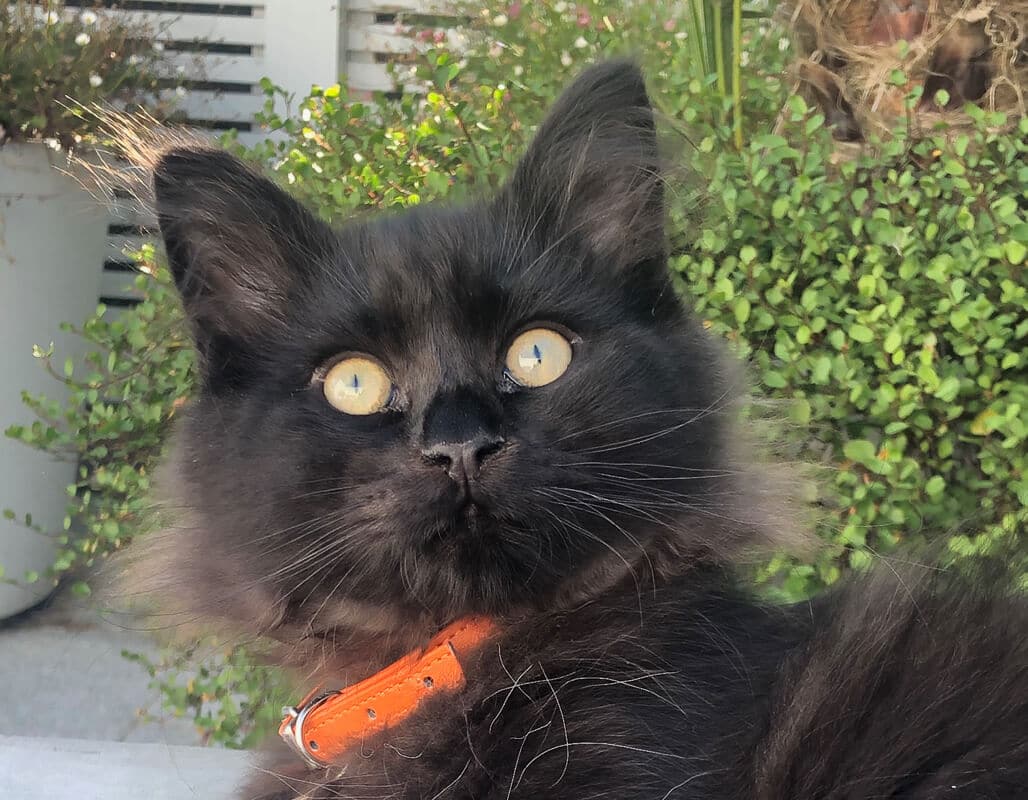
My Green Eyed Black Siberian Cat
Common Mistakes to Avoid
- Assuming a kitten's current coloring is its final adult coloring. As covered above, plenty of Siberian colors shift, darken, or become less distinct over the first couple of years — don't be surprised if your cat's coat looks different at 2 than it did at 2 months.
- Choosing a color expecting a specific personality. The coat-color/personality research that exists is limited, applies to cats broadly rather than Siberians specifically, and isn't strong enough to base a decision on. Prioritize meeting the actual kitten (or its parents) over picking a color for its supposed temperament.
- Assuming "hypoallergenic" means allergy-free. See the FAQ below — this is one of the most common misunderstandings about the breed, regardless of coat color.
- Overpaying for rarity without a health-tested breeder. A rare color (like true solid black, silver, or white) doesn't mean anything about health or temperament on its own — prioritize a breeder who health-tests over one who's simply marketing a rare color at a premium.
- Skipping grooming because a color "hides dirt well." Regardless of color, the triple coat mats the same way underneath — grooming needs don't change based on shade.
Frequently Asked Questions
What is the rarest Siberian cat color?
White is the classic answer here, and it holds up — despite frequently appearing in image searches, genuinely white Siberians are quite rare. Solid ("self") colors in general are less common than tabby patterns, and true solid black and silver are also among the harder colors to find. The most common Siberian look overall is a brown mackerel tabby, often with some white.
Is a black Siberian cat rare?
A genuinely solid, "self" black Siberian (no tabby ghosting, no smoke shading) is less common than the many brown/black tabby Siberians people often refer to informally as "black." Exact population statistics for a specific color within a single breed are hard to pin down reliably — no registry publishes a precise percentage — but among breeders and long-time owners, solid black is consistently described as one of the harder colors to source, alongside white and silver.
What about black-and-white Siberian cats specifically?
Black-and-white is a bicolor pattern — dense black patches over a white base, often with the classic inverted "V" facial marking. It's one of the more visually striking and commonly searched-for Siberian looks, and while not as rare as solid white or solid black, well-marked examples (clean, symmetrical white patches) can still take some searching to find from a reputable breeder.
What colors are Siberian kittens?
As covered above, kittens don't always look like their adult selves — colors can fade, darken, or become less distinct over time, and colorpoint kittens are born nearly white before their points develop.
Are silver Siberian cats rare?
Yes — silver is among the rarer Siberian colors, though white is generally considered rarer still.
How much do different colored Siberian cats cost?
This varies too much by breeder, region, and pedigree for us to give a reliable figure here, but as a general pattern: rarer colors (solid white, solid black, silver) and show-quality lines tend to command a premium over the more common brown tabby. Adoption through a rescue is typically far less expensive than buying from a breeder, though color selection will obviously be more limited. Always weigh cost against a breeder's health testing and reputation rather than choosing purely by color or price.
Are Siberian cats hypoallergenic — does coat color matter?
Not fully, no — no cat is completely allergen-free. What's true is that Siberians as a breed have been studied more than most for producing lower levels of Fel d 1 (the main cat allergen): research has found that roughly half of Siberians tested produce meaningfully less Fel d 1 than typical cats, with a smaller subset producing very low levels. Levels vary by individual, sex, and neuter status, and there's some indication coat color may play a role too, though the data isn't detailed enough to say "get this specific color for lower allergens." If allergies are a serious concern, the only reliable approach is to spend time with the specific cat you're considering (ideally more than once) before committing, rather than relying on breed or color alone.
Do Siberian cat colors affect health risk?
Not specifically documented for Siberians as a breed, but one general feline genetics pattern is worth knowing regardless of breed: cats with a fully white coat and blue eyes (from the dominant white gene) have a higher documented risk of congenital deafness than cats of other colors. This isn't unique to Siberians — it applies across cat breeds — but it's relevant if you're considering a white Siberian specifically. Beyond that, there's no strong evidence that Siberian coat color meaningfully predicts other health outcomes; overall breed health is more influenced by breeder practices and individual genetics than coat color.
How do I know if my cat is a Siberian?
Look first at the coat: an extremely thick, triple-layer coat that covers even the paw pads is a strong indicator. Siberians are also large, muscular cats with hindquarters longer than their front legs (which helps them jump impressively high), typically weighing 9–22 lbs depending on sex. Tufted ears and green or gold eyes are other good signs, though blue eyes or heterochromia occur occasionally too.
In Summary: Siberian Colors
As you can see, Siberian cats come in an enormous range of colors and patterns — and thanks to their open breed standard, new combinations keep showing up.
My own solid black Siberian, Alexei, actually has a smokier underbelly, and his coat has continued to shift subtly toward chocolate brown as he's aged. Now that I have him, I don't care what color he ends up — I love him regardless.
No matter how expensive your cat was, or what color it turned out to be, it will most likely be an affectionate, loyal companion — which is really the point.

Siberian Blue Kitten

Amanda created and owns The Discerning Cat. A lifelong cat lover she is the proud parent of two Siberian cats, Alexei and Vladimir. She is passionate about understanding cats and different cat breeds.
Amanda created and owns The Discerning Cat. A lifelong cat lover she is the proud parent of two Siberian cats, Alexei and Vladimir. She is passionate about understanding cats and different cat breeds.


Do t be fooled by his cuteness...beneath lies a plotting mind and toughness that has been borne out of the fact they originally hail from harsh conditions.
We love them all the same
We have two Siberians, getting them was the best decision ever. Both are Torbie, which you did not mention. They were fairly light colored (especially the female) but have darkened with age.
Hi Martha - thanks for commenting - I haven't heard of Torbie before - I will have to investigate. And getting my Siberian was the best decision ever as well!
@thediscerningcat, a Torbie is a tabby pattern cat with tortoise shell colors. My cat's littermate was one, she looked just like him (he's a classic black/brown tabby), only with orange highlights:) Like torties, vast majority are females.
Torbie sounds gorgeous!
good post
thanks!